Off-Roading in Alberta in Fall
PLUZ Tips, Trail Conditions & How We Prep Shoulder-season adventures for families who want to keep exploring after summer
Contents
- Fall in Alberta…
- Why Fall Feels Different on Alberta Trails
- Quick PLUZ Refresher (and Why It Matters More in Fall)
- How We Plan a Fall PLUZ Day
- What Changes on the Trail When the Seasons Shift: Mud, freeze-thaw, and “it looked fine at the trailhead”.
- Gear We Actually Bring When Nights Get Cold
- Helpful Links & Resources
- Final Thoughts
Fall in Alberta…
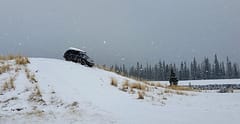
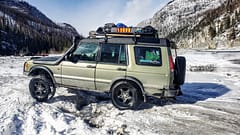
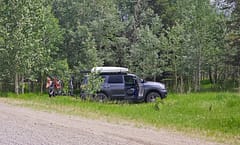
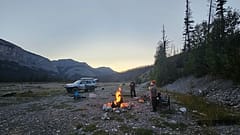
is one of our favourite times to get into the mountains. The crowds thin out a bit, the light gets that golden colour that makes every FSR look like a postcard, and the vehicles finally get a break from summer heat. It is also the season where trail conditions change fast; mud after a warm day and a cold night, early snow, shorter daylight, and usually less people unless it’s really warm and everyone is chasing summer.
This post is the seasonal companion to our Off-Roading in Alberta: Your Ultimate Guide. That guide covers the big picture: what you can drive, how PLUZs work, maps, and essential gear. Here we’re focused on fall and what we pay attention to when we venture into Public Land Use Zones (PLUZs) once summer starts winding down.
Why Fall Feels Different on Alberta Trails
Summer off-roading in Alberta is often about long days, dry-ish roads, and packing for heat. Fall flips a few switches:
- Daylight shrinks. Leaving early and having a hard turnaround time matters more than it does in July.
- Temperatures swing. Warm afternoons, cold nights, and freeze-thaw cycles that turn a “fine” trail into a rutted mess.
- Seasonal trail openings matter. In places like Ghost PLUZ, many OHV trails are open on seasonal windows (for example May 1–Nov 30 on some routes, with other trails year-round or winter-only). Check The Map / Internet — I don’t update this yearly.
- Hunting season overlaps. You’re sharing space with hunters. High-viz layers, knowing where you are, and not wandering off designated trails is part of being a good neighbour out there. The Ghost is now guns free so less to worry about there (unless it changes again).
Quick PLUZ Refresher (and Why It Matters More in Fall)
A Public Land Use Zone (PLUZ) is Alberta public land managed for recreation with its own rules. There are 18 PLUZs covering roughly 11,200 km², mostly along the Eastern Slopes. Yep, that’s a good chunk of land. They are not parks and every PLUZ has its own regulations, though many are similar. It is on us as users to know the rules for the zone we’re in. They are patrolled! We have been stopped and visited by conservation officiers and fish and wildlife. I recall even a person to do with fire safety checking on fire size and safety.
The basics we remind ourselves (and anyone riding with us) every trip:
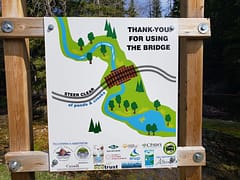
- Stay on designated trails. Leaving the tread is how trails get closed and how people get tickets.
- Highway vehicles are generally not allowed to leave the road except onto trails designated for the right type/size of OHV use.
- Keep wheels out of waterbodies and off beds/shores except at designated crossings.
- Obey signs, notices, and officers — ignorance is not a defence, and PLUZs are patrolled.
- Pack out what you pack in. Seriously this drives us crazy when people leave a bunch of crap and we have to truck it out for them (tents, garbage bags, broken chairs, you name it we’ve seen it).
- Fall is when “we’ve always gone this way” gets people in trouble. Seasonal closures, temporary advisories, and soft ground mean last year’s track might not be open or wise this weekend.
How We Plan a Fall PLUZ Day
Here’s the checklist we actually use before we load the kids:
- Pick the PLUZ and read that zone’s page on About Public Land Use Zones (Ghost, McLean Creek, Livingstone, etc. each have their own details).
- Check Public land closures and advisories the morning you leave. Nothing sucks more than showing up and the area is closed. It happens.
- Check the forecast and Alberta Fire Bans. Cold nights don’t cancel fire rules; they just make a warm campfire more tempting.
- If you’re random camping on the Eastern Slopes, you generally need a Public Lands Camping Pass. Know the 14-day move rules and the “no camping/fires within 1 km of certain roads or recreation areas” restrictions that apply in some zones. Again ignorance doesn’t stop tickets.
- Tell someone your plan — where you’re going and when you’ll be back. Cell service is unreliable; we bring a satellite communicator for exactly this reason (we’ve written about that in our gear posts).
- Pack for the coldest hour of the day, not the nicest Instagram light at noon.
What Changes on the Trail When the Seasons Shift: Mud, freeze-thaw, and “it looked fine at the trailhead”.
Wet trails are where most damage happens. Soft clay, melted frost, and shady creek crossings can stop a loaded truck faster than a rocky ledge. If the trail is chewing into deep ruts, we turn around. Keeping trails open for everyone matters more than finishing the loop we sketched on the map.
Shorter days and recovery time
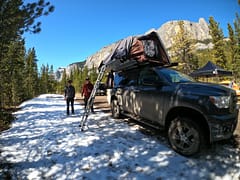
In summer you can burn daylight recovering from a stuck moment and still get home for bedtime. In fall, that same stuck moment can put you into the dark with kids who are cold and hungry. We bring recovery boards, a tow strap, and a real plan for airing down/up — and we leave earlier than we think we need to. We’ve all been there…or maybe only some of us.
Wildlife and hunting awareness
Fall means more animal movement and more hunters. We keep the dog close, wear something bright when we’re out of the vehicle, and don’t treat a quiet road as empty.
Sharing the trail
Motorized users should yield to non-motorized users; everyone should yield to horses. Slow down when you pass. If you’re in a group, the finger-count wave (how many are behind you) still works.
We have been stuck, several times. All of them in unexpected mud or a quick change of weather to snow when hours out on the trail. We even missed a family members surprise party because a 4 hours trip turned into a 10 hour one. We aren’t proud of these moments but they happen, just realize they happen and try to prevent them.
Gear We Actually Bring When Nights Get Cold
We’re not talking about a winch (but if you don’t know how to use yours check this out) — just calling out what fall specifically bumps up our priority list:
- Warm layers for everyone (including the “I didn’t think I’d get out of the truck” kid)
- Gloves that still work when wet, and a dry pair in a bag
- Headlamps — one per person, plus a spare
- Extra food and hot drinks (thermos = optimism)
- Recovery boards / MaxxTrax-style gear, tow strap, basic tools, spare tire, air compressor
- Paper map backup plus offline digital maps
- Satellite communicator for check-ins and emergencies
- First aid, and bear spray within reach (Alberta still recommends BearSmart habits year-round)
- If you’re newer to this, our ultimate Alberta off-roading guide has the fuller gear list, and our Off-Road Driver Training partnership with Paul Sinkinson is worth a look before you push into trickier terrain.
Helpful Links & Resources
Bookmark these before you go (they’re the ones we actually use):
- About Public Land Use Zones (Alberta.ca) — overview of all 18 PLUZs
- Public Land Use Zone regulations — camping, fires, motorized rules, trail etiquette
- Motorized recreation on public land — OHV vs highway vehicle rules, helmets, registration, wet-trail guidance
- Public land recreation maps — interactive / downloadable maps
- Public land recreation — starting hub for public land recreation info
- Public land closures and advisories — check the morning of your trip
- Public Lands Camping Pass — required for random camping on Eastern Slopes public land
- Alberta Fire Bans
- Public land enforcement — what officers look for, waterbody rules
- Report issues: 310-LAND (5263)
- Ghost PLUZ map example (update yearly): Ghost PLUZ georeferenced map (Open Alberta) — grab the newest PDF before you go
- Alberta Off-Highway Vehicle Association — safety / education / stewardship
- Our guide: Off-Roading in Alberta: Your Ultimate Guide
Final Thoughts
Fall off-roading in Alberta isn’t about chasing summer one more weekend. It’s its own season, it’s cooler, quieter, a little more serious about planning, and honestly some of the best family days we have in the mountains. Stay on the designated trails, check the current map and closures, pack for the cold evening you might earn, and leave the land better than you found it.
Happy trails — we’ll see you out there.